Seams, drains and standing water on low slopes
Flat Roof Repair in Maplewood, NJ
Water that lingers after rain, a split seam or a bubbled patch is how flat roof trouble shows up in Maplewood, NJ, usually above a back addition, a porch roof or a dormer. Call (862) 358-4524, say how long the puddles stay, and the contractor can describe what a look at the surface involves.
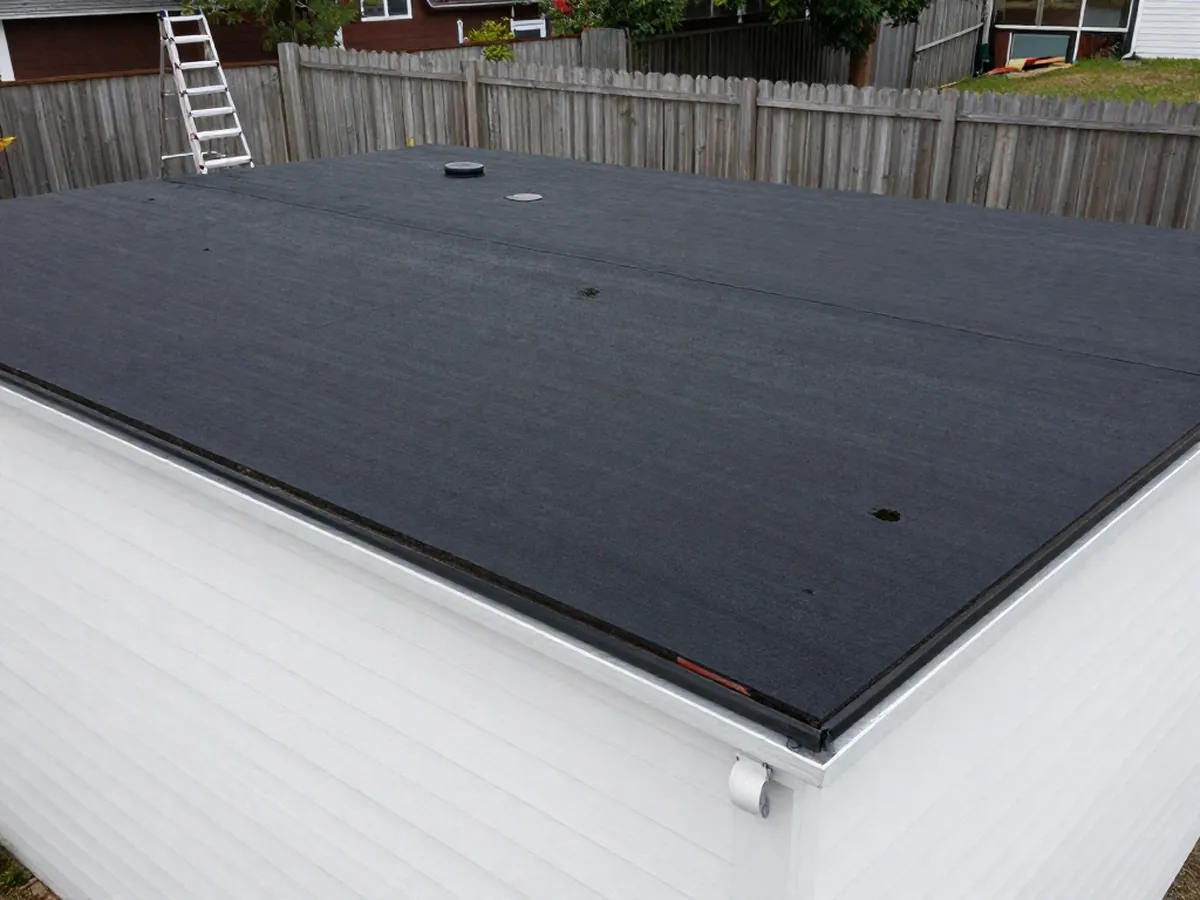
Have these ready
Details for a low-slope roof call
- What the surface looks like: gray rubber, black tar, white coating, gravel.
- Where the drain or scupper sits and how long puddles last after rain.
- Which room sits beneath the flat section and what shows on its ceiling.
- Any recent work on the roof and when it happened.
- Photos taken the day after a hard rain.
How soon is soon
That puddle: how long can it wait
A sagging ceiling below the flat roof, water at a fixture
Walk out of the room and call 911 before anything else
Water standing two days or more, or a split seam over a living space
Call (862) 358-4524 this week and say where the water gathers
A shallow puddle that disappears within a day
Photograph it and clear the drain from the ground if you can reach it safely
Get away and call for help if
- A ceiling under the flat section that droops or is holding water: move everyone from beneath it, then call 911.
- Do not walk on a flat roof to sweep off water or leaves. Wet membrane is slick, and a fall is the larger danger.
- Water reaching an outlet or fixture beneath the flat section: move to another room first, then dial 911.
- Wires near the edge of an addition: stay off the roof, keep ladders ten feet away and tell the electric utility.
Five questions
Questions this job brings up
How long is too long for a puddle on a flat roof?
The roofing manufacturers' trade group calls it ponding when water stays on the roof for 48 hours or more. It says that much standing water adds load to the deck, feeds algae and plant growth and speeds up wear on the membrane surface.
What slope keeps a flat roof draining?
The same group wants at least a quarter inch of fall for each foot of run, so water leaves on its own. It adds that model codes ask for that slope on new buildings, and for positive drainage once an existing roof is redone. Whether yours meets it takes a measurement on site.
What are flat roofs made of?
The Department of Energy names built-up roofs, single-ply membranes, modified bitumen sheets and spray polyurethane foam among low-slope surfaces, meaning a pitch of 2 in 12 or less. Green roofs also appear on its list. A roofer identifies which one covers your addition.
What does freezing weather do to a flat roof?
The trade group says ice that forms and melts on ponded water can scrub the membrane and damage it. Newark's low reaches 32 degrees or less on an average 22.6 days in January and 20.0 in February, according to NOAA's 1991-2020 normals.
Do flat roof repairs cover all six towns?
Yes. The contractor covers Maplewood and the five towns around it. South Orange roofing, West Orange roofing, Millburn roofing, Irvington roofing and Union roofing all have pages of their own. Call (862) 358-4524 and describe the surface and the drain.
Looks from the ground
Stick to looks taken from the yard, a window or the attic hatch. Anything that needs a ladder or a walk across the roof belongs to a roofer.
- From an upstairs window, look for water that stays on the roof after a day or two of dry weather. The roofing manufacturers' trade group calls water that sits 48 hours or longer ponding.
- Photograph the surface after a hard rain to show where water collects, then again two days later.
- Find the drain or scupper and note whether leaves have collected around it.
- Look at the ceiling below the flat section for faint tan marks and trace them in pencil with the date.
Questions for the roofer
Asking about a low-slope surface
Ask what the membrane is made of and how the seams are joined. Ask where the water is meant to leave the roof, and whether a second drain exists in case the first clogs.
Ask how the roof meets the main house wall, since that edge is where flat roofs often leak, and what happens to the flashing there.
What you might notice
What you might notice
- Water still pooled on the roof two days after a rain
- A seam, a corner or a strip of tape lifting or splitting
- A round drain with leaves stacked around it, or water circling slowly
- A ceiling stain under a back addition, a porch roof or a dormer
- Bubbles, blisters or cracks in a gray, black or white membrane
Moves that backfire
Four flat-roof habits worth dropping
- Walking on the roof to sweep.
A slip risks more than the leaves are worth.
- Letting a drain stay clogged through autumn, which sets up winter ponding.
- Smearing sealant over a seam without looking at what lies under it.
- Ignoring a small bubble, which gives water a place to spread under the membrane.
Where the paperwork lives
Flat roofs and the state code
An addition is part of the dwelling, so the state's ordinary maintenance list for reroofing a stand-alone house of one or two units reaches it too. The trade group adds that model codes want positive drainage whenever a roof is redone.
Where an addition touches a shared wall or a neighbor's house, the rules page points to the office that answers.