Shingles, slate, wood, metal and flat membranes
Roof materials around Maplewood, and what each one asks of you
Most roofs in these towns are made of one of five things. Here is what the federal agencies and the National Park Service say about each, so the conversation with a roofer starts from the same vocabulary.
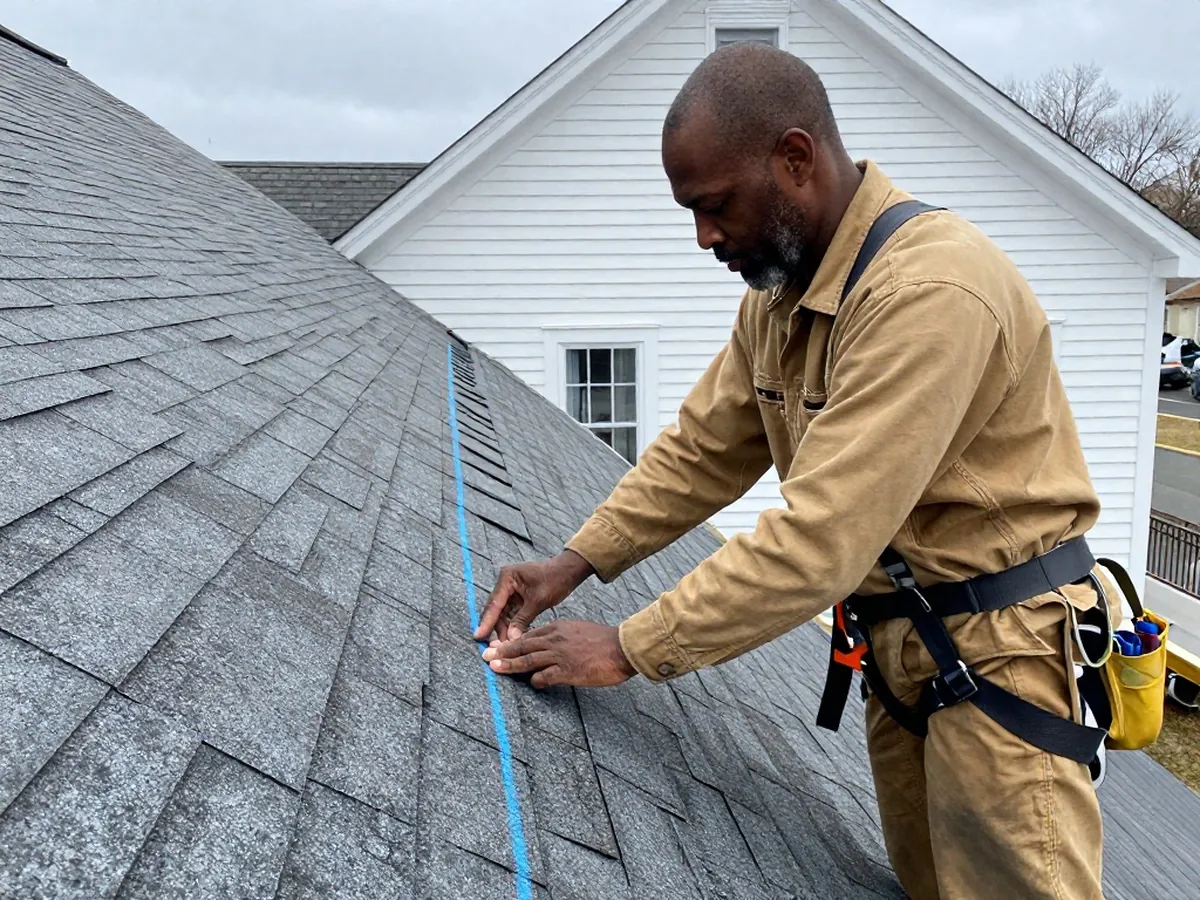
Asphalt shingles, a substitute that stuck
The National Park Service dates asphalt shingles to the 1890s and calls them common substitutes for wood shingles, slate and tile. FEMA's fact sheet for high-wind regions says to choose a class rating at or above the wind speed in the building code. Classes D, G and H cover 90, 120 and 150 miles per hour.
The Department of Energy says an asphalt shingle can be surfaced with light-colored or cool-colored granules to reflect more sun. It advises against field-coating a roof of shingles already installed because it can create moisture retention problems.
Slate and wood, long on character and short on forgiveness
The National Park Service says top-quality slate and flashing, kept up with minimal maintenance, will last 40 to 60 years. It shows slates eroding around repair nails driven through the exposed surface and warns that slate and sheet metal can fail if nailed too rigidly.
Wood shingles, it says, are ideally split with the grain perpendicular to the surface, and their flat faces erode from rain and ultraviolet light. Shingles much wider than about six inches can split when walked on. The Department of Energy rates wood as naturally cool-colored and says slate is not usually cool.
Metal roofs and the fastener question
The National Park Service notes that the spacing of seams on a standing-seam metal roof changes a building's overall scale, and that galvanic corrosion sets in when steel nails are used in copper sheet. Its advice is to pick fasteners of a metal sympathetic to those involved.
The Department of Energy says unpainted metals reflect sunlight well but give off heat poorly, and recommends a factory coating in a light or cool color.
Flat and low-slope surfaces
The Department of Energy calls a roof with a pitch of 2 in 12 or less low-slope, with built-up roofs, single-ply membranes, modified bitumen and spray polyurethane foam on its list of surfaces. The roofing manufacturers' trade group uses the word ponding for water that stays 48 hours or longer, and suggests a fall of at least a quarter inch for each foot.
Over a rear addition or a porch, that is the surface to ask about. The flat roof page has the symptoms and the questions.
Light colors and a New Jersey winter
The Department of Energy says reflective roofs achieve their greatest savings in hot climates but can raise energy costs in colder ones, and that a winter heating penalty may outweigh the cooling savings. Newark's July mean is 78.2 degrees and its January mean is 32.8, according to NOAA, so both seasons count.
Whichever material sits on your roof, call (862) 358-4524 and say what it is, or describe its color and surface if you do not know. The contractor can look at it from there.
Have these ready
Have your street address, the room where water shows and a rough roof age ready, then call (862) 358-4524. Tenants: tell the landlord or property manager before a roofer is involved. Served: Maplewood, South Orange, West Orange, Millburn, Irvington and Union.